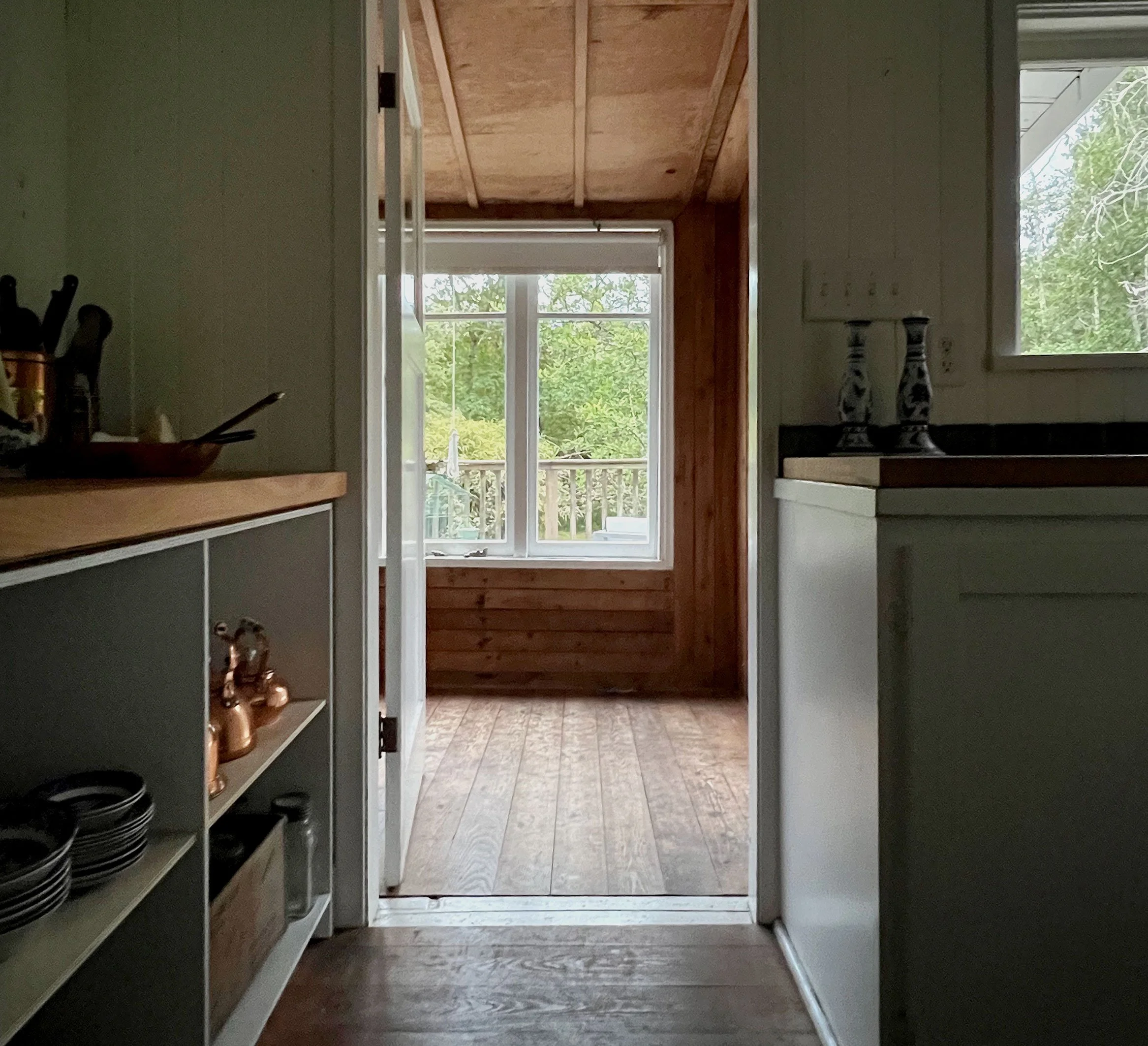
Beta Cottage is a practical Island artist residence that functions year-round.
Below you’ll find some useful information to find your way around the cottage, and some basics for island living.
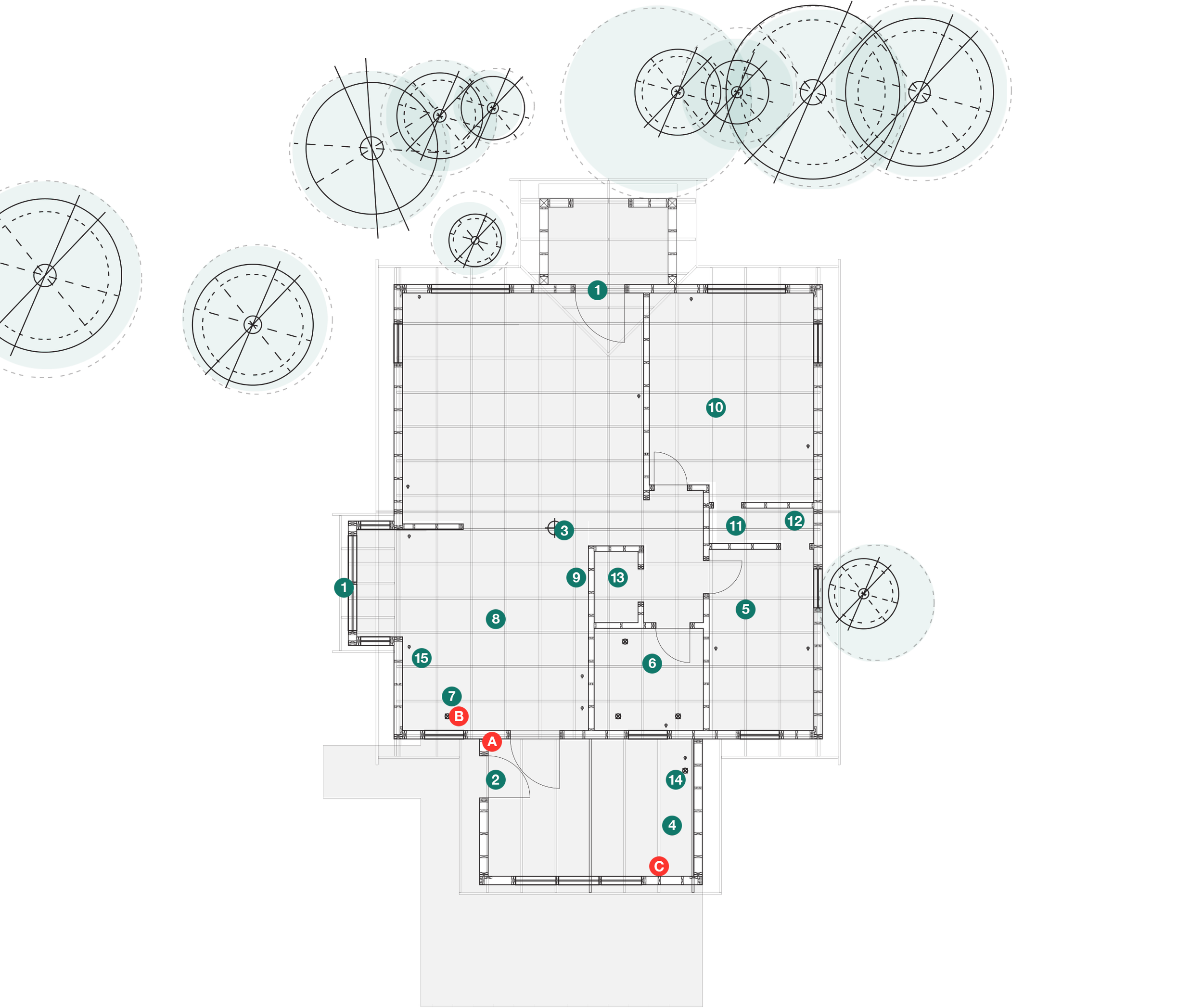
A. Fire Extinguisher
B. First Aid Kit, Candles
C. Headlamps
-
The Primary entrance is where you’ll find cedar kindling, a pair of rubber boots, and a bucket. We use the bucket to move kindling from the woodshed to the front entrance, and keep a few fires’ worth in the bucket at a time. You’ll use this entrance for your arrival and exit.
-
The rear entrance is the best access from the cottage to the backyard and the outside deck. When locked, this door can not be opened from the outside. Please secure the door latch with the green carabiner when departing and at night. Raccoons are brave and smart enough to find their way in.
-
The woodstove is a standard Legacy airtight stove. It is the primary heat source in the cottage and should be kept clean when not in use. In winter, keep a kettle of water on the stove, or a pot with water and orange peels to hydrate the air.
Read the Woodstove Instructions to learn how to use the stove. -
The Wi-Fi antenna and router are located on the fridge in the back room, ocassionally when the power goes out, they will need to be reset by unplugging them for 15 seconds each.
Wait for 5 minutes and the lights are green to reconnect.
The fridge is often kept with the essentials and is organized from top to bottom:
1. Dairy and Condiments
2. Meat and Eggs
3. Vegetables and water
4. Perishable Vegetable and Thawing Drawers -
The Primary bedroom is currently situated in the back of the house. Beside the bed, you’ll find a phone charger and a reading lamp.
In the closet, you’ll find 4 simple clothing hooks and a shipladder access to the attic. The attic is currently under construction, but feel free to look around carefully. There is a cot and a sleeping bag there for the adventurous. -
The Water system disposes of waste in a septic tank and field. Never flush anything other than toilet paper down the toilet. Even when very small or even broken down, hygiene products, paper towels, diaper waste, plastic wrap, etc., can inhibit the system and cause catastrophic septic failure.
-
Use the kitchen sink normally, draining soap and water but avoiding any organic material from entering the drain (use the drain guards). It is normal for the sink to occasionally clog, and it can be remedied by running hot water or with the plunger under the sink.
You’ll find a garbage can, and garbage bags under the sink to the left of the emergency supplies. -
The Kitchen cart is a family member in the kitchen. It is the home of most perishable fresh vegetables, and doubles as a common cutting surface. Underneath, you’ll find all the plates, and on the bottom rack, spare pots and cookware.
-
The stove is a classic electric cooktop and oven. Besides it, you’ll find an assortment of cutlery, utensils, and larger cookware.
Top Left: Cutlery
Bottom Left: Large Cookware
Top Middle: Small plates and bowls
Bottom Middle: Large Cookware
Left Top and Bottom: Collection Items -
The studio room is currently located in the front bedroom of the cottage. It is home to several working collections and current cottage projects. It is available for use.
Leave the studio room as you found it
No studio tools should leave the property, and should be returned to their location before departing the cottage. -
The studio closet houses a clean set of blankets for visitors who choose the couch.
It is the home to marine-related implements and accessories. You’ll find drybags, emergency equipment, and a marine radio. Please leave the radio alone unless you are certified with a Restricted Operator Certificate - Maritime (ROC-M)
Use marine equipment and boats at the discretion of your host. -
The bedroom closet has a few clothing hooks and a shipladder that leads to an attic. The attic is currently under construction, but houses a quiet reading area.
-
In the hall closet, you’ll find a broom and a dustpan hanging up, and extra toilet paper and paper towels on the top shelf.
-
The laundry is available for your use outside of the summer months, when we are extra frugal with water. It is a standard stacking unit that has been repaired several times, we recommend the following settings.
Washer: standard wash 40°
Dry: normal dry cycle
Ensure both machines are turned off when not in use. Ensure the lint Collector is clean -
You’ll find general cooking ingredients like spices and oil on the left, and ceramics and glassware on the right. In the bottom cupboards, you’ll find an electric kettle, some appliances, and cleaning supplies.
Cold Food
In the winter, cold food can be refrigerated in back room and in the shed’s cold storage, and in the refigerator.
Pantry
in the cupboards to the right of the sink, you’ll find spices, pasta, and some canned goods.
Consumable Vegatables
Vegatables that do not need to be refrigerated are kept on the kitchen cart, typically items freshly foraged, or ripening organics.
Tap Water
A high sulpher content is common from well water in early summer and through the fall months as the water table lowers and mineral content is higher. When the cottage is switched to the rainwater tanks this is not the case, but neither make for good cold drinking water so filtered water is recommended.
Food & Water
Woodstove and Firewood
Beta cottage's primary heat source is an airtight woodburning stove. We start fires in the stove with pitch/paper and cedar kindling. Once the fire starts, we use dry Douglas Fir, and Hemlock to burn throughout the day and night. In the winter, we sometimes burn hardwoods like Arbutus, Walnut, and Oak so the fire burns throughout the night. For detailed instructions on how to use the woodstove, you can read more here.
Electric Heat
The cottage also has baseboard heaters installed for extremely cold spells and to keep items indoors from freezing completely. Electric heat should always be avoided and operated only by cottage stewards.
Electric Light
The cottage has been converted to mostly LED lights and switches in every room. The outdoor lights are not LED and consume more energy so make sure to turn them off before bed.
Candles
In storms and Gales, the power often goes out – you’ll find spare candles under the sink, and they are available at the lumberyard and garage if they run out.
Heat & Light
The water system disposes of grey water and sewage through a septic tank and field.
Toilet
Only toilet paper and what you personally bring should ever be flushed down the toilet. Never flush any hygiene products, paper towels, cigarette butts, or plastic wrap down the toilet. It can make a very messy backup and an expensive plumbing bill.
Showers
The hot water tank will accommodate about twenty minutes of shower time before it starts to get cold. Once its cold, it takes about 30-45 minutes to reheat.
Bathroom & Shower
Radio
You’ll find an AM/FM radio on the shelf beside the stove. A tradition at the cottage is to play CBC Radio 3 during visits. The station features several shows that highlight classical, jazz, and experimental music through an educated Canadian musical lens.
Wifi
You’ll be happy if you’re not a gamer; the wifi works, but you will zone out on video calls and big data transfers. We use it for digital work all the time, but allow time for heavy lifts.
Network: Beta
Password: redrightreturn